Jojoba: The Plant That Speaks the Same Language as Our Skin
One of the biggest misconceptions in skincare is that all oils are the same.
They’re not.
Different botanical oils have different fatty acid profiles, different molecular structures, and different ways of interacting with our skin. Some are rich and occlusive, others are lightweight and fast absorbing. Some are better suited for dry skin, while others are beautifully balanced for combination, oily, or changing skin.
And then there is jojoba.
Except jojoba isn’t actually an oil.
What is Jojoba?
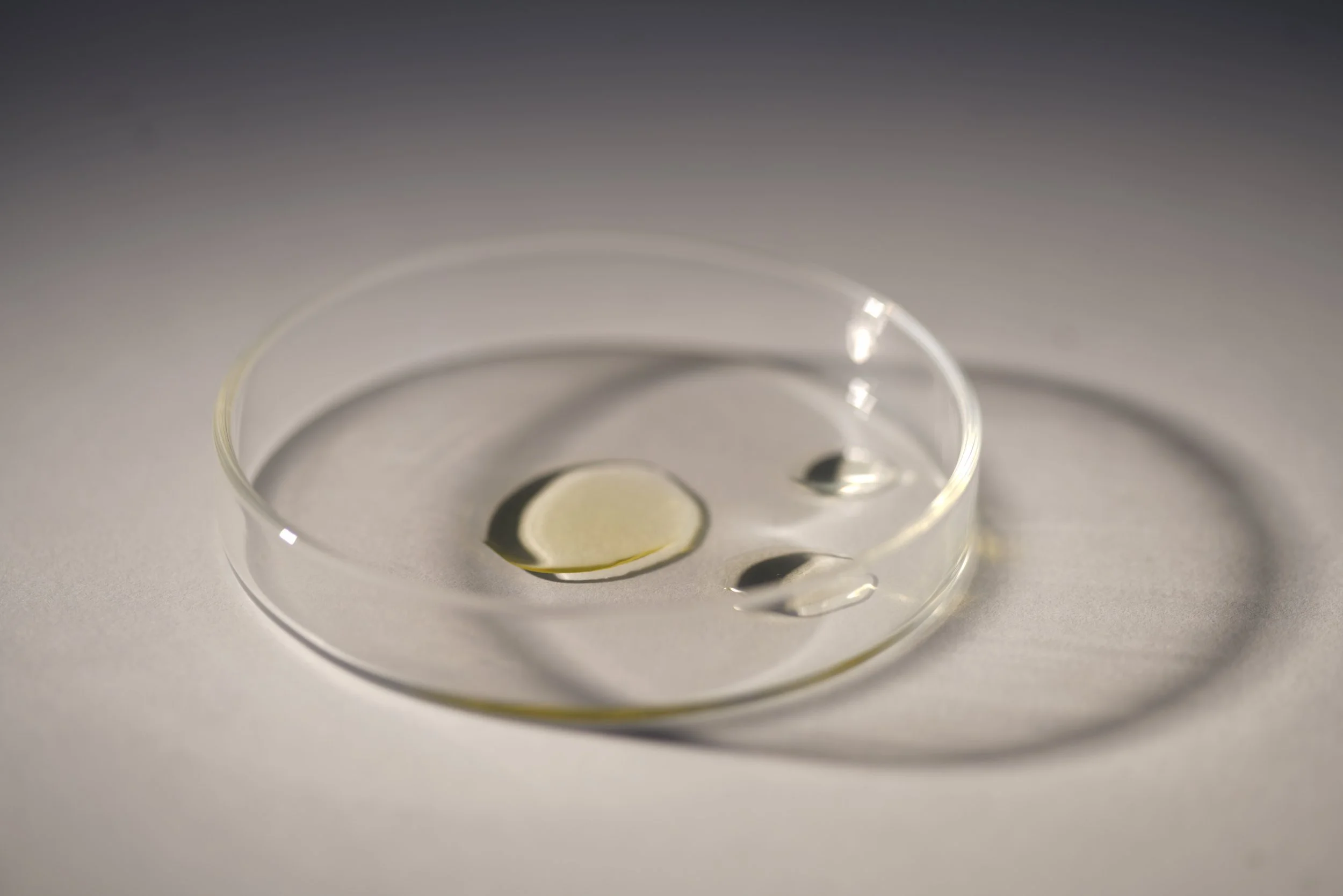
Jojoba (Simmondsia chinensis) is technically a liquid wax ester extracted from the seeds of a desert shrub native to the southwestern United States and northern Mexico.
This seemingly small distinction is what makes jojoba one of the most fascinating ingredients in cosmetic science.
Unlike most plant oils, which are composed primarily of triglycerides, jojoba is made almost entirely of long-chain wax esters. Interestingly, these wax esters are also one of the key components of healthy human sebum—our skin’s own natural protective lipid.
In other words, jojoba is one of the most biomimetic botanical ingredients used in skincare, thanks to its wax ester composition and remarkable compatibility with the skin’s surface lipids.
Our skin understands it.
Why Does That Matter?
Healthy skin isn’t just about hydration.
It relies on a healthy skin barrier—a complex structure made up of skin cells and lipids that protects us from the outside world while helping prevent excessive water loss.
When that barrier becomes compromised, skin may feel dry, tight, reactive, or uncomfortable.
Research suggests jojoba can help support the skin barrier by reducing transepidermal water loss (TEWL), improving skin hydration, and helping maintain skin softness and flexibility. Its unique wax ester composition also makes it remarkably stable and naturally resistant to oxidation compared with many triglyceride-rich botanical oils, making it an exceptional ingredient for both skin compatibility and formulation stability.
One of the things I appreciate most about jojoba is that it doesn’t overwhelm the skin.
It feels elegant.
Balanced.
Comfortable.
And that’s exactly how I believe skincare should feel.
Jojoba and Changing Skin
As we move through different stages of life, our skin changes too.
Stress, travel, seasonal shifts, environmental exposure, and hormonal fluctuations all influence the skin barrier. During perimenopause and menopause, declining estrogen often leads to reduced sebum production, increased dryness, and greater sensitivity.
While jojoba isn’t a treatment for hormonal changes, its compatibility with the skin’s own lipid system makes it a wonderful supportive ingredient during these transitions.
Rather than forcing the skin to behave differently, it works alongside the skin’s natural biology.
For me, that’s an important distinction.
I don’t formulate products to fight the skin.
I formulate them to support it.
Why I Chose Jojoba for
When I began creating The Rose In You, I wasn’t simply choosing beautiful botanical oils.
I was building a formula.
Every ingredient needed to contribute something meaningful—not only on its own, but in synergy with everything around it.
Squalane became the heart of the serum because of its exceptional skin compatibility and beautiful texture.
Jojoba became one of its closest partners.
Together, they create a lightweight foundation that allows rose, frankincense, sandalwood, geranium, and palmarosa to deliver their therapeutic and sensory qualities without the serum ever feeling heavy or greasy.
Many people still believe facial oils are too rich to wear during the day or underneath makeup.
That simply hasn’t been my experience.
When thoughtfully formulated, facial oils can feel incredibly elegant.
That’s why The Rose In You was designed to absorb beautifully into the skin, leaving it nourished, supported, and prepared for whatever comes next—whether that’s makeup, a walk outdoors, or simply another day.
Why Sustainability Matters
At Amberlight Beauty, the story behind an ingredient matters just as much as its performance.
We source certified organic jojoba oil from HobaCare®, a respected American producer known for cultivating high-quality jojoba using responsible agricultural practices.
Choosing suppliers isn’t only about consistency and quality.
It’s also about supporting growers who share our belief that caring for the land is inseparable from caring for our skin.
After all, every bottle of skincare begins long before it reaches the laboratory.
A Final Thought
Nature doesn’t always provide every answer.
But sometimes it provides an ingredient that speaks the same language as our skin.
For me, jojoba is one of those rare ingredients.
Quietly effective.
Scientifically fascinating.
Beautifully uncomplicated.
And a reminder that the best formulations don’t force the skin to change—they support it in doing what it already knows how to do.
The Science Behind This Ingredient
Jojoba Chemistry & Dermatological Applications
Gad HA, Roberts A, Hamzi SH, et al.
Jojoba Oil: An Updated Comprehensive Review on Chemistry, Pharmaceutical Uses, and Toxicity.
Polymers. 2021
https://pubmed.ncbi.nlm.nih.gov/34073772/
An excellent review covering jojoba’s chemistry, wax ester composition, stability, anti-inflammatory properties, wound healing, and cosmetic applications.
Plant Oils & Skin Barrier Function
Lin TK, Zhong L, Santiago JL.
Anti-Inflammatory and Skin Barrier Repair Effects of Topical Application of Some Plant Oils.
International Journal of Molecular Sciences. 2018
https://pmc.ncbi.nlm.nih.gov/articles/PMC5796020/
One of the most cited reviews on plant oils and skin barrier function, hydration, TEWL, inflammation, and lipid repair.
Human Study
Meier L, Stange R, Michalsen A, Uehleke B.
Clay Jojoba Oil Facial Mask for Lesioned Skin and Mild Acne – Results of a Prospective Observational Pilot Study.
https://pubmed.ncbi.nlm.nih.gov/22585103/
Demonstrated improvements in mild acne lesions using a jojoba-containing facial mask, supporting jojoba’s skin compatibility.
Wound Healing
Ranzato E, et al.
Jojoba liquid wax stimulates wound healing in vitro.
https://pubmed.ncbi.nlm.nih.gov/21211559/
Explores mechanisms by which jojoba may support skin repair.
Inflammation
Tietel Z, et al.
Topical application of jojoba wax reduces inflammatory markers in ex vivo human skin.
https://pubmed.ncbi.nlm.nih.gov/38344180/
Provides newer evidence supporting jojoba’s role in modulating inflammatory responses in skin.